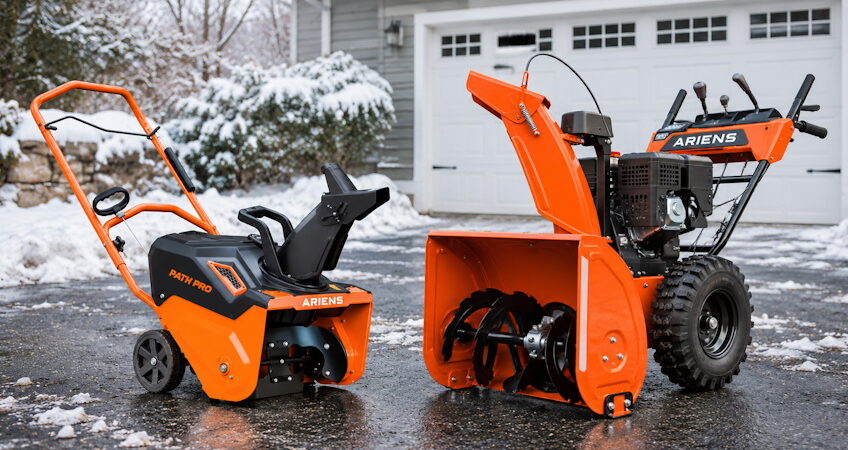
When shopping for a new snow blower, one of the most important decisions you’ll make is choosing between a single stage and two stage snow blower. While both are designed to make snow removal faster and easier, they differ significantly in power, performance, design, and the types of conditions they can handle.
Here in Connecticut, where winter weather can range from a few inches of light, fluffy snow to more than a foot of heavy, wet accumulation, having the right snow removal equipment can make all the difference.
In this guide, we’ll compare single stage vs. two stage snow blowers to help you determine which option is best suited for your property, budget, and snow removal needs.
What Is a Single Stage Snow Blower?
A single stage snow blower, also known as a one stage or 1 stage snow blower, uses a single rotating auger to collect snow and discharge it through the chute. The auger performs both functions in one motion, which is where the term “single stage” comes from.
Single stage snow blowers are typically smaller, lighter, and easier to maneuver than two stage models. On many models, the auger makes contact with the ground, allowing the machine to clear snow close to the pavement.
Single stage snow blowers are best suited for:
- Small to medium-sized driveways
- Paved walkways and sidewalks
- Light to moderate snowfall
- Snow accumulations of approximately 6 to 8 inches or less
- Homeowners with limited storage space
- Relatively flat, paved surfaces
Advantages of Single Stage Snow Blowers
- Generally more affordable
- Lightweight and easy to maneuver
- Compact design for easier storage
- Clears snow close to paved surfaces
- Typically requires less maintenance
- Available in gas-powered and battery-powered models
Disadvantages of Single Stage Snow Blowers
- Less effective in deep, heavy, or wet snow
- Generally not recommended for gravel driveways
- Shorter snow-throwing distance
- Less effective against compacted snow and heavy snowbanks
- Typically less suitable for steep driveways
What Is a Two Stage Snow Blower?
A two stage snow blower, sometimes referred to as a double stage or 2 stage snow blower, uses two separate mechanisms to remove snow. First, a rotating auger collects and breaks up the snow. Next, a high-speed impeller throws the snow through the discharge chute.
This two-stage process allows the machine to handle larger volumes of snow, clear deeper accumulations, and throw snow farther than most single stage models.
Most two stage snow blowers also feature a self-propelled drive system and adjustable skid shoes, making them better suited for larger properties, uneven surfaces, and challenging winter conditions.
Two stage snow blowers are best suited for:
- Medium to large driveways
- Heavy and wet snowfall
- Deep snow accumulations
- Gravel and uneven driveways
- Sloped properties
- Compacted snow left behind by snowplows
- Frequent or demanding snow removal
Advantages of Two Stage Snow Blowers
- Handles deeper and heavier snow
- Greater snow-throwing distance
- Typically features self-propelled operation
- Available with wider clearing widths
- Suitable for gravel driveways when properly adjusted
- Better performance in demanding winter conditions
Disadvantages of Two Stage Snow Blowers
- Higher upfront purchase price
- Larger and heavier equipment
- Requires more storage space
- Typically requires more maintenance
- May leave a thin layer of snow on pavement
Single Stage vs. Two Stage Snow Blower Comparison
Understanding the differences between a 1 stage vs. 2 stage snow blower can help you make a more informed purchasing decision. Here’s how the two types of snow blowers generally compare.
| Feature | Single Stage Snow Blower | Two Stage Snow Blower |
|---|---|---|
| Snow removal system | Auger only | Auger and impeller |
| Typical clearing width | 18–22 inches | 24–30+ inches |
| Ideal snow depth | Up to 6–8 inches | 8–20+ inches |
| Snow-throwing distance | 15–35 feet | 25–50+ feet |
| Heavy, wet snow | Limited performance | Better performance |
| Paved driveways | Excellent | Excellent |
| Gravel driveways | Not generally recommended | Suitable with adjustment |
| Sloped driveways | Limited capability | Generally better suited |
| Self-propelled | Typically no | Typically yes |
| Maneuverability | Easier | Model-dependent |
| Storage requirements | Smaller | Larger |
| Maintenance | Generally less | Generally more |
| Purchase price | Lower | Higher |
Performance, clearing capacity, and throwing distance vary by manufacturer, model, and snow conditions.
Single Stage vs. Two Stage Snow Blower: Which Performs Better in Heavy Snow?
When comparing a single stage snow blower vs. a two stage snow blower for heavy snowfall, two stage models generally offer superior performance.
The combination of an auger and impeller allows a two stage snow blower to collect, process, and discharge larger amounts of snow more efficiently. This is particularly beneficial when dealing with heavy, wet snow, deep accumulations, or compacted snow at the end of your driveway.
Single stage snow blowers can perform exceptionally well during smaller storms, but they may struggle when snow becomes particularly deep, dense, or wet.
For Connecticut homeowners who want to be prepared for everything from light snowstorms to major nor’easters, a two stage snow blower is often the more versatile investment.
Is a Two Stage Snow Blower Better for Gravel Driveways?
Yes. When comparing a single vs. double stage snow blower for a gravel driveway, a two stage model is generally the better choice.
Many single stage snow blowers use an auger that makes direct contact with the ground. On gravel surfaces, this can cause loose stones to be collected and discharged through the chute, potentially damaging equipment or nearby property and creating a safety hazard.
Two stage snow blowers typically feature adjustable skid shoes that allow you to raise the auger housing slightly above the ground. When properly adjusted, this helps reduce the likelihood of picking up gravel while clearing snow.
If you have a gravel driveway, uneven terrain, or an unpaved surface, a two stage snow blower is generally recommended.
Single Stage vs. Two Stage Snow Blower: Cost and Maintenance
Another important consideration when comparing one stage vs. two stage snow blowers is the overall cost of ownership.
Single stage snow blowers typically have a lower purchase price and fewer mechanical components. Their simpler design can make routine maintenance easier and potentially less expensive.
Two stage snow blowers generally cost more because of their larger clearing capacity, additional mechanical components, drive systems, and performance capabilities. However, the additional investment can be worthwhile for homeowners who regularly deal with significant snowfall or have larger areas to clear.
Regardless of which type you choose, routine snow blower maintenance is important for maximizing equipment performance, reliability, and lifespan.
Which Snow Blower Is Best for Connecticut Winters?
Connecticut winters can be unpredictable. Some storms produce only a few inches of light snow, while others bring significant accumulations of heavy, wet snow, ice, and slush.
When deciding between a two stage vs. single stage snow blower, consider the size of your property, the type of surface you’re clearing, and how frequently you need to remove snow.
Choose a Single Stage Snow Blower If:
- You have a small or moderately sized paved driveway.
- You primarily clear sidewalks and walkways.
- You typically remove snow before it accumulates significantly.
- You prefer lightweight, compact equipment.
- You’re looking for a more affordable snow removal solution.
Choose a Two Stage Snow Blower If:
- You have a large, long, or steep driveway.
- You frequently experience heavy or wet snowfall.
- You have a gravel or uneven driveway.
- You need to clear compacted snow left behind by snowplows.
- You want greater clearing capacity and snow-throwing distance.
- You want equipment capable of handling more demanding New England winters.
For many Connecticut homeowners, a two stage snow blower provides greater flexibility and peace of mind throughout the winter season. However, a quality single stage snow blower may be more than sufficient for smaller properties.
Frequently Asked Questions About Single Stage and Two Stage Snow Blowers
What is the main difference between a 1 stage and 2 stage snow blower?
A single stage snow blower uses one auger to collect and discharge snow. A two stage snow blower uses an auger to collect snow and a separate impeller to discharge it, allowing it to handle larger volumes of snow more efficiently.
Is a two stage snow blower better than a single stage?
A two stage snow blower is generally better for deep snow, heavy and wet snow, larger driveways, and uneven surfaces. However, a single stage snow blower may be a better option for smaller paved driveways and lighter snowfall.
Is a two stage snow blower worth the extra money?
For homeowners with larger properties or those who frequently experience heavy snowfall, a two stage snow blower is often worth the additional investment. Its increased power, clearing capacity, and versatility can significantly reduce the time and effort required to remove snow.
Can a single stage snow blower handle 12 inches of snow?
Some single stage snow blowers may be capable of clearing 12 inches of light snow, particularly in multiple passes. However, most are better suited for smaller accumulations. A two stage snow blower is generally recommended for snow depths of 12 inches or more.
Do two stage snow blowers work well in light snow?
Yes. Two stage snow blowers can handle light snowfall as well as deeper accumulations. However, a single stage snow blower may be quicker and easier to maneuver when clearing small amounts of snow from paved surfaces.
Are double stage and two stage snow blowers the same?
Yes. The terms double stage, two stage, and 2 stage snow blower all refer to the same type of snow removal equipment, which uses an auger and a separate impeller to collect and discharge snow.
Which type of snow blower lasts longer?
Both single stage and two stage snow blowers can last for many years with proper maintenance. Equipment quality, frequency of use, operating conditions, and regular servicing generally have a greater impact on longevity than the number of stages alone.
Find the Right Snow Blower at River East Power Equipment
Whether you’re considering a single stage or two stage snow blower, investing in the right equipment can make winter snow removal easier, faster, and more manageable.
At River East Power Equipment, we understand the challenges that Connecticut homeowners and property professionals face throughout the winter. Our knowledgeable team can help you compare snow blower models, evaluate features, and select equipment that fits your property, budget, and snow removal needs.
Contact River East Power Equipment today to learn more about our snow removal equipment, sales, and service, and get your property prepared for the next Connecticut snowstorm.