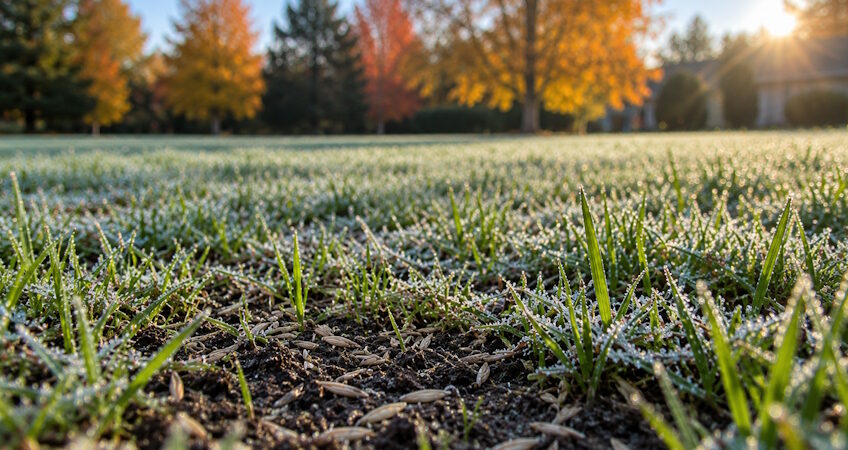
Fall is one of the best times to plant grass seed in Connecticut, thanks to cooler temperatures, more consistent moisture, and fewer weeds competing for space. But as temperatures begin to drop and chilly New England mornings become more common, homeowners often wonder: Will frost kill grass seed?
The good news is that grass seed can often survive frost, especially if it hasn’t started germinating. However, the timing of the frost, the type of grass, and how far along your new lawn is in the growing process can all make a difference.
At River East Power Equipment, we know how important it is to keep your lawn looking its best throughout the changing seasons. Here’s what Connecticut homeowners should know about frost, grass seed, and protecting a newly planted lawn.
Will Frost Kill Grass Seed?
In most cases, a light frost will not kill grass seed that hasn’t germinated yet. Dormant grass seed is surprisingly resilient and can withstand freezing temperatures while waiting for favorable growing conditions.
However, once grass seed begins germinating and producing young shoots, it becomes more vulnerable to cold weather.
Here’s how frost affects grass seed at different stages:
- Ungerminated grass seed: Generally survives light frost and freezing temperatures, provided the seed remains viable and isn’t damaged by other environmental conditions.
- Germinating grass seed: More vulnerable to frost because the seed has begun absorbing water and developing delicate roots and shoots.
- Newly sprouted grass: May experience leaf damage or slowed growth following a frost, particularly during a hard freeze.
- Established grass: Most cool-season grasses commonly grown in Connecticut tolerate typical fall frosts quite well.
The biggest concern isn’t necessarily a single cold morning. It’s whether temperatures remain warm enough for grass seed to germinate and develop strong roots before winter arrives.
Does Frost Kill Grass Seed Before It Germinates?
If you’ve recently spread grass seed and notice frost covering your lawn the next morning, there’s usually no reason to panic.
Dry, dormant grass seed can survive freezing conditions because it hasn’t yet entered its active growth stage. In fact, some homeowners intentionally spread grass seed late in the season so it remains dormant through winter and germinates when temperatures warm in spring.
This practice is called dormant seeding, and it can be an effective option for Connecticut lawns when performed under the right conditions.
However, grass seed that begins germinating during a warm spell and then encounters prolonged freezing temperatures may suffer damage.
Can Grass Seed Survive Frost After It Starts Growing?
Yes, newly growing grass can sometimes survive frost, but its chances depend on the severity and duration of the cold.
A brief, light frost may cause little or no lasting damage to cool-season grass seedlings. A hard freeze, on the other hand, can damage tender grass blades and young root systems.
If your new grass experiences frost, look for these warning signs:
- Grass blades that appear brown, yellow, or wilted
- Young seedlings that stop growing
- Thin or patchy areas where new grass fails to establish
- Grass that appears damaged several days after freezing temperatures
Keep in mind that slower growth during cold weather doesn’t automatically mean your grass is dead. As soil temperatures decline, cool-season grasses naturally grow more slowly.
Give your lawn time to recover before deciding whether additional seeding is necessary.
What Temperature Is Too Cold for Grass Seed?
Grass seed germination depends more on soil temperature than air temperature.
In Connecticut, most homeowners plant cool-season grass varieties, including Kentucky bluegrass, perennial ryegrass, and tall fescue.
These grasses generally germinate best when soil temperatures are around 50°F to 65°F or warmer, depending on the variety.
| Grass Type | Approximate Germination Soil Temperature |
|---|---|
| Kentucky Bluegrass | 50°F–65°F and above |
| Perennial Ryegrass | 50°F–65°F and above |
| Tall Fescue | 50°F–65°F and above |
| Fine Fescue | 50°F–65°F and above |
These are general guidelines, not strict temperature cutoffs. Germination rates vary by species, seed quality, moisture, and soil conditions.
When soil temperatures consistently fall below approximately 50°F, germination often slows considerably. As temperatures approach freezing, active growth becomes increasingly limited.
Pro Tip: Use a soil thermometer to check conditions before planting. A sunny 60°F afternoon doesn’t necessarily mean the soil is warm enough for rapid germination.
When Is the Best Time to Plant Grass Seed in Connecticut?
For most Connecticut lawns, late August through September is the ideal time to plant cool-season grass seed.
During this period, soil temperatures are generally warm enough to encourage germination, while cooler nights help reduce heat stress on young grass.
Early October can sometimes work, particularly during warmer fall seasons, but the risk increases as the first hard freeze approaches.
Here’s a general seasonal guide for Connecticut homeowners:
- Late August–September: Typically the best window for establishing new grass.
- Early October: May still be suitable if soil temperatures remain favorable and enough growing time remains.
- Late October–November: Often too late for reliable fall establishment, although dormant seeding may become an option once conditions are consistently cold.
- Early Spring: Another opportunity for seeding, although emerging weeds and summer heat can make establishment more challenging.
Because Connecticut weather varies from year to year, it’s best to consider current soil temperatures and the forecast rather than relying on calendar dates alone.
How to Protect Grass Seed From Frost
Although you can’t control New England’s unpredictable weather, there are several things you can do to give newly planted grass seed the best chance of surviving.
1. Plant Grass Seed Early Enough
Timing is your best defense against frost damage.
Whenever possible, plant grass seed at least six to eight weeks before the typical first hard freeze in your area. This gives seedlings more time to germinate, develop roots, and become established.
2. Choose the Right Grass Seed
Cool-season grasses are generally the best choice for Connecticut lawns.
Kentucky bluegrass, perennial ryegrass, and tall fescue are popular options because they’re adapted to the region’s seasonal temperature changes.
Selecting the right seed mixture for your property’s sunlight, soil, and lawn usage can improve your chances of success.
3. Keep the Soil Consistently Moist
Grass seed needs adequate moisture to germinate.
After seeding, water lightly and frequently enough to keep the upper layer of soil moist without creating puddles or washing seed away.
As seedlings establish, transition toward deeper, less frequent watering.
Avoid watering when temperatures are at or below freezing, especially if water could accumulate and turn to ice.
4. Apply a Light Layer of Straw or Seed Mulch
A thin layer of clean, weed-free straw or a dedicated grass-seed mulch can help retain moisture, reduce erosion, and moderate temperature fluctuations near the soil surface.
Avoid applying too much material, as thick layers can block sunlight and interfere with seedling development.
5. Avoid Walking on Frost-Covered Grass
Walking on frozen or frost-covered seedlings can damage delicate grass blades.
If your lawn is covered in frost, wait until it melts before mowing, raking, or allowing heavy foot traffic.
6. Use the Right Lawn Equipment
Preparing the soil properly before seeding can make a significant difference in how successfully your lawn establishes.
Depending on your property’s condition, useful lawn care equipment may include aerators, spreaders, dethatchers, and lawn mowers.
Proper soil preparation helps improve seed-to-soil contact, allowing grass seed to absorb moisture and establish roots more effectively.
Can You Plant Grass Seed After the First Frost?
Yes! A first frost doesn’t automatically mean the grass-seeding season is over.
If soil temperatures remain warm enough and the weather forecast shows a stretch of favorable conditions, grass seed may still germinate after an early frost.
However, as Connecticut moves deeper into fall, the likelihood of successful establishment decreases.
If temperatures have become consistently cold, you may want to consider dormant seeding instead.
What Is Dormant Seeding?
Dormant seeding involves spreading grass seed after soil temperatures have dropped low enough to prevent germination.
The seed remains inactive during winter and begins germinating when soil temperatures rise in spring.
This technique can be useful for filling bare patches or establishing grass in areas where traditional fall seeding wasn’t possible.
For best results, dormant seeding should take place after the soil has cooled consistently, so the seed doesn’t germinate during an unexpected warm spell.
It’s also important to consider drainage, erosion, and the possibility of seed loss during winter weather.
Frequently Asked Questions About Frost and Grass Seed
Will a Frost Kill Grass Seed Overnight?
A light overnight frost usually won’t kill dormant, ungerminated grass seed. Newly germinated seedlings are more sensitive, but they may also survive a brief frost, particularly if temperatures rise again the following day.
Can Frost Kill Grass Seed That Has Already Sprouted?
Yes, frost can damage or kill young grass seedlings, especially during a hard freeze or repeated freezing conditions. However, a light frost doesn’t necessarily mean newly sprouted grass will die.
Can Grass Seed Survive Frost and Snow?
Yes. Dormant grass seed can survive frost and snow through the winter. Successful spring germination depends on seed viability, soil conditions, moisture, and whether the seed remains in place.
Should I Water Grass Seed Before a Frost?
Maintain appropriate soil moisture during establishment, but avoid heavy watering immediately before freezing temperatures. Water during warmer daytime conditions when needed, and avoid creating standing water that could freeze.
Will Grass Seed Germinate After a Freeze?
It can. Ungerminated grass seed that remains viable may begin growing when soil temperatures become favorable again. However, seed that has already germinated may be more susceptible to damage from freezing conditions.
Is October Too Late to Plant Grass Seed in Connecticut?
Not necessarily. Early October seeding may still succeed during a mild fall, but results become less predictable as soil temperatures decline. For reliable establishment, late summer through September is generally preferred.
Get Your Lawn Ready for Fall With River East Power Equipment
Whether you’re planting new grass, repairing bare patches, or preparing your property for winter, having the right equipment can make fall lawn maintenance easier.
At River East Power Equipment, we help Connecticut homeowners and landscaping professionals find dependable outdoor power equipment for every season.
From lawn mowers and other lawn care equipment to the tools you need to maintain your property, our team can help you find the right solutions for your needs.
Visit River East Power Equipment to explore our outdoor power equipment and get your lawn ready for whatever New England weather brings next.