Whether you’re repairing bare spots, starting a new lawn or trying to bring a struggling yard back to life, you probably don’t want to wait months to see results. Choosing the right fast growing grass seed and giving it the proper growing conditions can dramatically improve how quickly your lawn fills in.
But what is the fastest growing grass seed, and how fast does grass seed grow once you put it down?
For Connecticut homeowners, the answer depends on the type of grass seed you choose, the time of year, soil conditions, moisture and how well you prepare the area before planting.
Here’s what you need to know if you want to grow grass fast and establish a healthy lawn.
What Is the Fastest Growing Grass Seed?
For lawns in Connecticut and much of New England, perennial ryegrass is generally one of the fastest-germinating cool-season grasses.
Under favorable conditions, perennial ryegrass can begin germinating in approximately 5 to 10 days. That makes it a popular choice for quickly establishing new turf or filling bare and thin areas.
Other common cool-season grasses generally take longer to germinate:
- Perennial ryegrass: Approximately 5–10 days
- Tall fescue: Approximately 7–14 days
- Fine fescue: Approximately 7–14 days
- Kentucky bluegrass: Approximately 14–30 days
Keep in mind that germination time isn’t the same as having a fully established lawn. Seeing the first green shoots is only the beginning.
Is the Fastest Growing Grass Seed Always the Best Choice?
Not necessarily.
It’s tempting to choose grass seed based entirely on how quickly it germinates, but speed shouldn’t be your only consideration.
Different grasses perform better under different conditions. Sun exposure, shade, drainage, foot traffic and soil conditions can all influence which grass will perform best.
That’s one reason many grass seed products designed for Northeast lawns contain a blend of several cool-season grasses. For example, a mix might contain perennial ryegrass for quicker germination along with Kentucky bluegrass and fescues for other desirable lawn characteristics.
The goal isn’t simply to get grass growing as quickly as possible. It’s to establish grass that can continue thriving after those first seedlings emerge.
How Fast Does Grass Seed Grow?
So, how fast does grass seed grow?
Under ideal conditions, you may see your first seedlings within about a week when planting a fast-germinating variety such as perennial ryegrass. Other grass varieties can require two, three or even four weeks before significant germination occurs.
Several factors influence how quickly your grass seed germinates:
Soil Temperature
Grass seed needs suitable soil temperatures to germinate. Cool-season grasses generally establish best when soil is warm enough for germination while air temperatures are relatively moderate.
Moisture
Grass seed needs consistent moisture during germination. Allowing newly planted seed to completely dry out can significantly reduce your results.
At the same time, flooding the area isn’t helpful either. The objective is to keep the upper layer of soil consistently moist without creating puddles or washing seed away.
Seed-to-Soil Contact
Simply throwing seed on top of hard, compacted dirt isn’t the best way to establish a lawn.
Grass seed needs good contact with the soil. Loosening the surface and lightly working the seed into the uppermost layer can significantly improve germination.
Sunlight
Different grass varieties have different sunlight requirements. Make sure you’re choosing seed appropriate for the amount of sun the area receives.
Time of Year
Timing makes a major difference.
In Connecticut, late summer into early fall is often an excellent window for establishing cool-season grass. The soil remains warm while air temperatures begin cooling, creating favorable growing conditions.
Spring can also work, although newly established grass may have less time to develop before summer heat arrives.
How to Grow Grass Fast on Dirt
If you’re starting with a bare patch of dirt, preparation is one of the most important parts of the process.
Here’s how to grow grass fast on dirt while giving your seed the best chance of success.
1. Clear the Area
Start by removing rocks, sticks, weeds, dead vegetation and other debris.
If you’re repairing an existing lawn, rake away dead grass and thatch so the new seed can actually reach the soil.
2. Loosen the Soil
Grass seed will have a difficult time establishing itself on extremely hard or compacted ground.
Use a rake or appropriate lawn equipment to loosen the upper layer of soil. For larger areas with compacted soil, aeration or more extensive soil preparation may be necessary.
Learn more about the best time to aerate your lawn in New England.
3. Improve the Soil if Necessary
Poor soil can make establishing grass much more difficult.
A soil test can help identify pH or nutrient issues before you seed. Depending on your soil conditions, you may need to incorporate appropriate amendments or quality topsoil.
Avoid simply adding fertilizer without understanding what the soil actually needs.
4. Choose the Right Grass Seed
If quick germination is important, look for a high-quality seed mixture containing perennial ryegrass that’s appropriate for your property.
But don’t choose based solely on the words “fast growing” on the package.
Consider:
- Sun versus shade
- Soil conditions
- Foot traffic
- Drainage
- Intended lawn use
- Local climate
- Long-term maintenance requirements
A grass seed blend designed specifically for Northeast lawns can often provide a good balance of quick establishment and long-term performance.
5. Spread the Seed Evenly
Follow the manufacturer’s recommended seeding rate.
Using too little seed can leave the lawn thin, while putting down excessive seed can create unnecessary competition between seedlings.
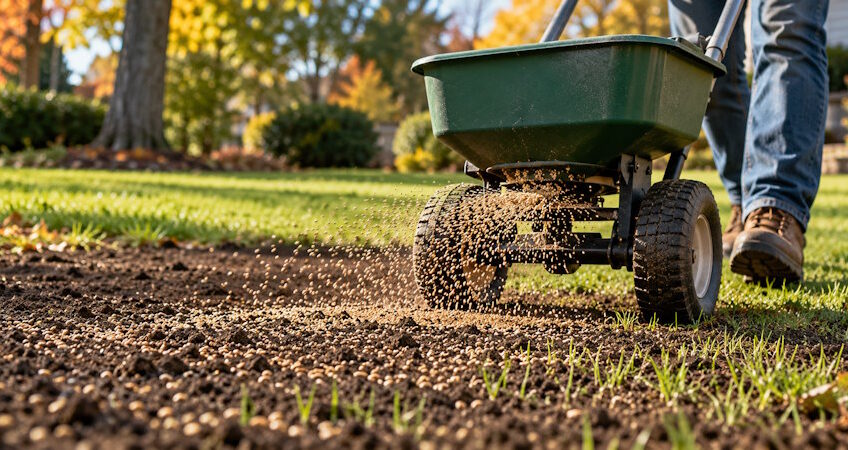
A broadcast or drop spreader can help distribute grass seed more consistently across larger areas.
6. Lightly Rake the Seed
After spreading, lightly rake the area to help improve seed-to-soil contact.
You don’t want to bury the seed several inches deep. The goal is simply to ensure that the seed is making good contact with the prepared soil.
7. Keep the Seed Moist
Watering is one of the most important steps when you’re trying to grow grass fast.
Newly seeded soil should remain consistently moist during germination. This may require light watering more than once per day depending on temperature, rainfall, wind and soil conditions.
Avoid applying so much water that it creates runoff or moves the seed around.
Once the grass has germinated and begins developing roots, you can gradually transition toward deeper and less frequent watering.
How Fast Does Grass Grow After Germination?
Germination is just the first step.
Even if grass seed germinates in five to ten days, your lawn isn’t immediately ready for regular use.
Those tiny seedlings need time to develop their root systems and become established. Growth rate will vary based on the grass species, temperature, moisture, sunlight, soil fertility and other conditions.
Be especially careful about heavy foot traffic during this period.
You’ll also want to wait before mowing. Rather than mowing based strictly on the number of days since planting, allow the new grass to reach an appropriate mowing height for the variety you’ve planted. Make sure the soil is firm enough that your mower won’t pull up or damage young seedlings.
How to Grow Grass Fast: Common Mistakes to Avoid
Sometimes getting grass to grow faster isn’t about doing more—it’s about avoiding mistakes that slow germination and establishment.
Watch out for these common problems:
- Planting seed at the wrong time of year
- Choosing grass that’s poorly suited to your property
- Seeding directly over hard, compacted soil
- Allowing new seed to dry out
- Overwatering and washing seed away
- Burying grass seed too deeply
- Applying too much seed
- Mowing new grass too soon
- Allowing heavy foot traffic on new seedlings
- Ignoring underlying soil or drainage problems
Taking the time to properly prepare your lawn before seeding can save you from having to repeat the entire process later.
Can You Make Grass Seed Germinate Faster?
You can’t force grass seed to germinate overnight, but you can create better conditions for faster and more consistent germination.
The biggest things you can control are seed selection, timing, soil preparation, seed-to-soil contact and moisture.
Start with fresh, high-quality grass seed suited to your Connecticut lawn. Prepare the soil properly, seed at the recommended rate and pay close attention to watering during the first few weeks.
And remember: faster isn’t always better. A lawn that takes a little longer to establish but develops strong roots is ultimately more valuable than grass that sprouts quickly but struggles afterward.
What’s the Best Time to Plant Fast Growing Grass Seed in Connecticut?
For cool-season lawns in Connecticut, late summer through early fall is generally one of the best periods for seeding.
The combination of warm soil and increasingly cooler air temperatures is favorable for cool-season grass germination and establishment. There is also typically less competition from many summer annual weeds.
The exact timing varies from year to year, so don’t rely solely on the calendar. Weather, soil temperatures and upcoming frost conditions all matter.
If you’re doing other fall lawn work at the same time, check out our complete guide to fall lawn care tips.
Get Your Lawn Ready With River East Power Equipment
Growing a healthy lawn starts with good seed and soil preparation, but having the right equipment can make maintaining it much easier.
Whether you’re preparing soil, aerating an existing lawn, mowing new grass or maintaining a larger property, River East Power Equipment in East Hartford, CT can help you find the outdoor power equipment you need.
We carry lawn mowers, zero-turn mowers, aerators, spreaders, blowers and other lawn care equipment for Connecticut homeowners and landscaping professionals.
Visit River East Power Equipment to explore our lawn and outdoor power equipment or stop by our East Hartford location for help finding the right equipment for your property.