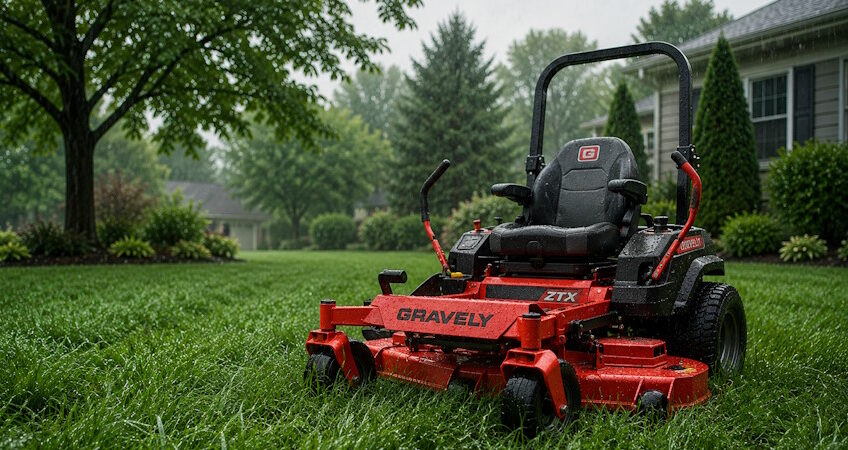
It happens all the time during spring and summer in New England. You finally have time to mow the lawn, but overnight rain, morning dew, or a passing thunderstorm leaves your grass soaking wet. That leads to the big question many homeowners ask: can you cut wet grass?
Wet soil is also softer, which means heavy lawn mowers can leave ruts, tire marks, or compacted areas throughout your yard.
Clumping Creates Lawn Problems
One of the biggest issues with cutting grass when wet is clumping. Wet grass tends to stick together underneath the mower deck and discharge chute.
These thick clumps can smother sections of your lawn underneath, blocking sunlight and airflow. If left sitting too long, clumped grass can even contribute to fungal lawn diseases.
Wet Grass Is Harder on Lawn Equipment
Wet grass puts additional strain on your lawn mower’s engine and blades. Moisture can also lead to grass buildup underneath the mower deck, reducing cutting performance and increasing maintenance needs.
For homeowners using battery-powered lawn equipment, wet conditions may also create additional safety concerns depending on the equipment manufacturer’s recommendations.
Can You Cut Grass When It’s Wet If You Have To?
Sometimes waiting simply isn’t possible. Extended rainy weather can cause your lawn to grow quickly, especially during peak spring and summer growing seasons in Connecticut.
If you absolutely must cut wet grass, here are some important tips to minimize damage:
Raise Your Mower Deck
Cutting wet grass shorter than normal increases stress on the lawn and makes clumping worse. Raise your mower height slightly to reduce strain on both the grass and the mower.
Use Sharp Mower Blades
Sharp blades are even more important when mowing wet grass. Dull blades tend to rip and tear wet grass instead of cutting it cleanly.
Mow Slower Than Normal
Wet grass is heavier and more difficult for your mower to process. Slowing down allows the mower blades more time to cut evenly and discharge clippings properly.
Clean Your Mower Deck Frequently
Grass buildup underneath the deck happens quickly when cutting wet grass. Periodically stop and clear excess clippings to maintain proper airflow and cutting performance.
Avoid Steep Slopes
Wet grass can become slippery very quickly, especially on hills. If your property has steep areas, it’s often safer to wait until conditions dry out.
When Is The Best Time To Mow Grass?
For the healthiest lawn and best mowing performance, try to mow when the grass is dry.
Late morning or early evening are often ideal times to mow during summer. By then, morning dew has usually evaporated, but temperatures are still manageable for both you and your equipment.
Avoid mowing during the hottest part of the afternoon whenever possible, especially during heat waves common throughout New England summers.
The Right Lawn Equipment Makes A Difference
Whether your lawn is dry or slightly damp, using reliable lawn care equipment helps improve mowing performance and lawn health.
At River East Power Equipment, we help homeowners and landscaping professionals find the right lawn mowers, trimmers, blowers, spreaders, and commercial lawn care equipment for properties of all sizes. Proper equipment maintenance, sharp blades, and the right mower setup can make a major difference in overall lawn quality.
If your mower struggles in heavy grass conditions, it may be time to upgrade your lawn care equipment or service your current machine before peak mowing season.
Better Lawn Care Starts With Better Timing
So, should you cut wet grass? In most situations, it’s best to wait until your lawn dries whenever possible. While you can cut wet grass if necessary, dry conditions typically produce healthier lawns, cleaner cuts, and less stress on your lawn equipment.
Looking for dependable lawn care equipment for New England properties? Contact River East Power Equipment today to explore residential and commercial lawn mowers, trimmers, blowers, spreaders, and more.