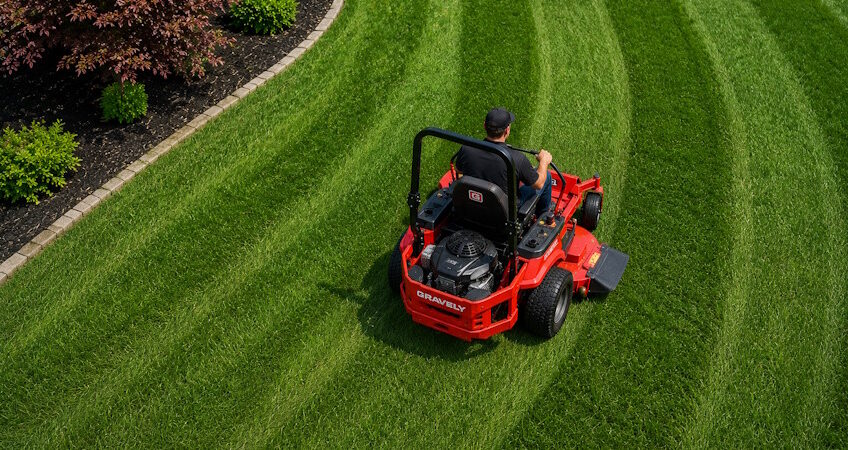
Zero turn mowers are incredibly popular for homeowners and landscaping professionals because they’re fast, efficient, and highly maneuverable. But if you’ve never used one before, learning how to drive a zero turn mower can feel intimidating at first.
One of the most common beginner mistakes? Tearing up the lawn while turning, stopping, or accelerating.
At River East Power Equipment, we help homeowners and commercial landscapers throughout Connecticut choose and maintain the right lawn care equipment for their properties. Whether you’re upgrading from a traditional riding mower or operating a zero turn mower for the first time, learning the basics can help you mow safely and avoid damaging your lawn.
What Makes a Zero Turn Mower Different?
Unlike traditional lawn tractors that use a steering wheel, zero turn mowers use two steering levers to independently control each rear wheel.
This allows the mower to turn extremely tightly — often with a turning radius close to zero. While this makes mowing faster and more efficient, it also means sudden movements can easily rip or scuff your grass if you’re not careful.
How To Operate a Zero Turn Mower
If you’re wondering how to use a zero turn mower for the first time, start slow and focus on smooth movements.
Step 1: Start in an Open Area
Before mowing your entire property, practice driving in a flat, open section of your lawn with minimal obstacles.
Get comfortable learning how the steering levers respond before attempting tight turns around landscaping, trees, or flower beds.
Step 2: Understand the Steering Levers
The two steering handles control both speed and direction.
- Push both levers forward evenly to move straight ahead
- Pull both levers backward evenly to reverse
- Push one lever slightly more than the other to turn gradually
- Move one lever forward and the other backward for sharper turns
Small, smooth adjustments are the key to learning how to drive a zero turn mower without damaging your lawn.
Step 3: Accelerate Slowly
Zero turn mowers are much more responsive than standard riding mowers. Sudden acceleration can cause the drive tires to spin and dig into soft grass.
Start slowly and build confidence gradually as you get used to the controls.
How To Avoid Tearing Up Your Lawn
One of the biggest concerns beginners have when learning how to operate a zero turn mower is leaving tire marks or damaging grass while turning.
Here are some important tips to help protect your lawn.
Avoid Sharp Pivot Turns
The fastest way to tear up your grass is performing aggressive zero-radius spins while stationary.
Instead of spinning in place, make slow, rolling turns whenever possible. Allow the mower to continue moving slightly forward while turning to reduce turf damage.
Slow Down Before Turning
Taking corners too quickly often causes skidding or gouging, especially on damp lawns.
Reduce your speed before making turns and avoid jerky steering movements.
Be Extra Careful On Wet Grass
Wet grass and soft soil dramatically increase the chances of lawn damage when using a zero turn mower.
If possible, wait until your lawn dries before mowing — especially after heavy rain.
Use Multi-Point Turns
Professional landscapers often use gentle three-point turns instead of hard pivots. This technique helps minimize tire stress on the lawn while still maintaining efficiency.
How To Mow Stripes and Straight Lines
Once you get comfortable driving, you can begin improving your mowing patterns.
To create clean, professional-looking lines:
- Focus your eyes ahead instead of directly in front of the mower
- Overlap slightly on each pass
- Maintain consistent speed
- Avoid sudden steering corrections
Many homeowners are surprised how quickly they improve after just a few mowing sessions.
Common Beginner Zero Turn Mower Mistakes
Driving Too Fast
Zero turn mowers are designed for speed, but mowing too quickly often leads to uneven cuts and lawn damage.
Overcorrecting Steering
New operators often make overly aggressive steering inputs. Smooth, gradual movements produce the best mowing results.
Mowing Wet or Soft Lawns
Even experienced operators can leave tire marks in wet conditions. Softer lawns require extra caution.
Ignoring Blade Maintenance
Dull mower blades tear grass instead of cutting it cleanly, which can negatively impact lawn health and appearance.
The Right Zero Turn Mower Makes A Difference
Not all zero turn mowers are built the same. The size of your property, terrain, obstacles, and mowing frequency all play a role in choosing the right machine.
At River East Power Equipment, we help homeowners and commercial landscapers find dependable zero turn mowers, lawn tractors, trimmers, blowers, and lawn care equipment built for New England properties and conditions.
If you’re new to zero turn mowers, our team can also help you understand the controls, maintenance requirements, and best practices for safe operation.
Mastering a Zero Turn Takes Practice
Learning how to use a zero turn mower takes a little practice, but once you get comfortable, you’ll likely never want to go back to a traditional riding mower. Smooth steering, controlled turns, and proper mowing habits can help you mow faster while keeping your lawn healthy and damage-free.
Looking for the right zero turn mower for your property? Contact River East Power Equipment today to explore residential and commercial lawn mowers and lawn care equipment designed for performance, comfort, and durability.